

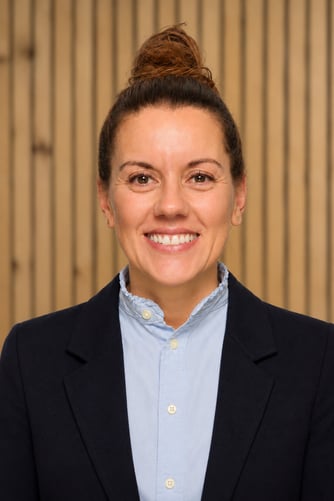
We are delighted to welcome Klaudia Castro to machineMD as a Clinical Training Manager.
With many years of experience in medical education, simulation training, and customer-facing training programmes, Klaudia brings a practical, structured, and deeply collaborative approach to helping clinical teams adopt new technologies with confidence.
We spoke with Klaudia about her professional journey, what drew her to machineMD, and how thoughtful training can support customers as neos® enters daily clinical use.
Could you tell us a little about your professional background and how your previous experiences have shaped your approach to clinical training?
When I first came to Switzerland, I worked in Project Management Office roles at Novartis and Credit Suisse, where I learned the importance of structure, planning, and bringing different stakeholders together in highly regulated environments.
I then joined VirtaMed, a medical training company growing from start-up to scale-up. During that time I wore many different hats, from leading the global logistics operations to Training & Education, where I discovered my real passion: making complex medical topics easy to understand and practical to apply. Working closely with surgeons, I learned the “how” and the “why” behind surgical procedures.
What I enjoy most is turning that knowledge into clear, practical training that helps people without a medical background understand the clinical context and confidently engage with medical experts. That is what shapes my approach to clinical training today: understand the bigger picture first, then make it simple, relevant, and useful.
What attracted you to machineMD, and what are you most looking forward to in your new role?
I was immediately drawn to the start-up spirit and to a product with a very clear human purpose. There is a lot of energy in building something new, and what makes it especially meaningful is knowing that the work is connected to a real clinical need. That is a powerful mission to contribute to.
I am also excited about being in a role where training directly helps users in their daily work. For me, training should not be a “read and understood” box to tick. It should give people the confidence to use a product well, in a way that is meaningful for them and for the patients they support.
What are your main considerations when developing and delivering clinical training for healthcare professionals across different locations and clinical environments?
It starts with knowing the audience. The people who use the device, such as medical assistants or technicians, and the physicians who interpret the results do not necessarily need the same content or the same level of depth.
Training also needs to fit into the reality of a clinic. Time is limited, workflows differ, and people need short, focused modules rather than long sessions that are difficult to integrate into a busy day.
That is why I believe in a mixed-methods approach to training. Live onboarding is valuable when people need hands-on practice and immediate feedback, while e-learning and quick reference guides help reinforce knowledge over time and give users something they can return to when they need it. Combining these formats makes the training more practical, repeatable, and easier to retain.
At the same time, consistency is important. When training is delivered across different sites, the core message and quality need to remain the same, while still allowing for local differences such as language, workflows, and staff roles.
Ultimately, the goal is to enable users to work independently and confidently, without needing to call support for device set-up or routine software use.
How do you approach building strong relationships with customers and understanding their needs throughout the training process?
I like to start by listening. What do customers expect? How does their clinic work? Where do they already see potential challenges?
From there, it is important to clarify goals and expectations together before training starts, and then adapt the training to their setting and to the existing experience of their staff.
For me, the relationship does not end once the first training session is complete. It is important to stay reachable after go-live, especially when the first real cases come in, and to follow up with customers as they begin using the product in practice.
I also think it is essential to ask for feedback regularly and to act on it visibly. Recurring questions or comments should be passed on to customer support, product management and quality management so the whole team can learn from them.
And finally, trust comes from being reliable. If I promise something, I follow through.
Looking ahead, what opportunities do you see as machineMD builds mature clinical training programmes?
There is a great opportunity to move from individual onboarding towards a structured, repeatable programme with clear learning paths for each role.
As the number of sites and countries grows, we can also build a library of e-learning modules, short videos, and practical support materials that help us scale while keeping the quality of training high.
Another important opportunity is to learn from training data and support requests. If we can see where users struggle, we can continuously improve not only the training, but also the product experience.
What motivates you most in your work, particularly when it comes to supporting healthcare professionals and improving patient care?
What motivates me most is doing work that has a real purpose and makes a difference, whether that means making someone’s job easier or ultimately contributing to better patient care.
I also love being part of a team that shares a common goal and works together to achieve it. It is important to me to work with people who are professional and kind — and who do not lose their sense of humour along the way.
At the end of the day, it is the people you work with who make the biggest difference.
Outside of work, what helps you recharge and stay inspired?
First and foremost, I am a very proud mum of two boys, aged 12 and almost 16.
I have also been passionate about health and wellbeing for as long as I can remember; I bought my first nutrition book at the age of 11! Over the years, I studied Traditional Chinese Medicine and became a nutrition advisor specialising in the Five Elements approach. Recently, I also started training to become a longevity coach because I believe we only get one body, and we should take good care of it.
A few years ago, I rediscovered my love for yoga. Today, I regularly practise Ashtanga and, when time allows, teach Hatha yoga at a small studio close to home. For me, yoga is much more than being able to bend into funny shapes. It is about connecting body, breath, and mind, and trying to bring a little of that mindfulness into everyday life. My aim is to be more present instead of constantly thinking about what is next. Some days it works beautifully; other days, well, that is why they call it a practice.
At the end of the day, it is all about living a healthy, balanced life, enjoying the journey, and most importantly, not taking myself too seriously.
At the end of the day, it is all about living a healthy, balanced life, enjoying the journey, and most importantly, not taking myself too seriously.