
![MachineMD_RGB_C_DarkBG[5718]](https://www.machinemd.com/hs-fs/hubfs/MachineMD_RGB_C_DarkBG%5B5718%5D.png?width=200&height=26&name=MachineMD_RGB_C_DarkBG%5B5718%5D.png "MachineMD_RGB_C_DarkBG[5718]")
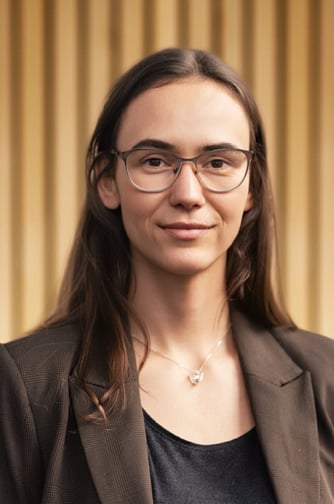 We are delighted to welcome
 With a PhD in Neuroscience from the University of Zurich and a background in Health Sciences and Technology from ETH Zurich, Céline brings a rare combination of scientific depth, clinical insight, and hands-on experience in digital health product development.
In this article, Céline shares how evidence-driven thinking, close collaboration with clinicians, and a genuine passion for neuroscience have shaped her approach to building medical technology.
How has your experience in research and digital health shaped your approach to product development?
Overall, I bring an analytical, pragmatic, and user-focused perspective to product development. My PhD in neuroscience strongly shaped my methodical and evidence-driven mindset. At the same time, being based in a children's hospital gave me direct exposure to clinicians, patients, and their families, helping me develop a deeper understanding of clinical workflows as well as their needs and perspectives.
In my subsequent role working on healthcare software projects, I further developed a pragmatic approach to problem-solving, balancing ideal solutions with real-world constraints such as time and budget. I learned that understanding users and minimizing friction in their workflows is critical, and that effective solutions are not always purely technical — they can also be organizational and require strong communication with stakeholders.
What does your role as Requirements Engineer involve in practice?
In practice, my role sits at the intersection of different disciplines. I gather, structure, and document information in a way that aligns with medical device standards and regulatory requirements. I find this aspect of the work quite similar to conducting a small research project, as it requires a structured approach, consistency, and continuous learning.
At the same time, the role is highly collaborative. I work closely with different teams to understand their perspectives and translate these into clear requirements that can be effectively implemented by developers.
What attracted you to machineMD and our medical device, neos®?
What attracted me most is the opportunity to work on a product with a direct clinical application in neuroscience; this is quite rare and aligns very well with my background and interests.
Once I learned more about neos, I found it particularly exciting that it leverages technology to enable non-invasive, fast, and cost-effective measurements. This creates opportunities not only for broader accessibility but also for longitudinal monitoring of neurological conditions.
What excites you most about working at the intersection of neuroscience and oculomics?
Oculomics a field where research is still actively evolving, so working on a product in this space also means contributing to its advancement by building tools that help uncover new insights into neurological conditions through objective, measurable signals. Eye movements provide a unique window into brain function, and combining this with advances in technology can open up entirely new diagnostic possibilities.
What do you enjoy outside of work?
Outside of work, I enjoy staying active, whether through sports like running, yoga, or dancing, or by more social and cultural activities such as visiting museums and going to concerts. I also like to unwind by cooking meals while listening to audiobooks.