Multiple Sclerosis
Eye movement disturbances are present in upt o 75% of MS patients.
There are over 55 million people worldwide living with dementia in 2020. This number will almost double every 20 years, reaching 78 million in 2030 and 139 million in 20502.
Oculomotor deficits in AD include saccade, fixation, and smooth pursuit3. Increased large intrusive saccades and less accurate saccadic movements of AD patients were found in saccadic tasks4. In fixation tasks, AD patients required a longer amount of time to fixate the target but had shorter fixation duration.
Several studies have also shown that quantitative pupillometry may be able to detect Pupillary Light Reflex (PLR) changes in early Alzheimer’s Disease5,6,7. These display results compatible with parasympathetic dysfunction, including an increased latency of pupillary constriction to light, decreased constriction amplitude, reduced mean constriction velocity and faster redilation after light offset, decreased maximum velocity of constriction (MCV) and maximum constriction acceleration (MCA) compared to controls. Amongst all pupillometric features, MCA and MCV have been reported as the most accurate parameters to differentiate AD patients from healthy controls8.
AD affects the cholinergic Edinger Westphal nucleus (EWN), which is the central brainstem sub-nucleus of the oculomotor complex, involved in the control of the pupil constriction. It has been suggested that pathological changes of the EWN may be an early and specific feature of AD and they may result in decreased cholinergic control of pupillary responses8. Neuronal loss in the locus coeruleus of patients with AD may lead to decreased sympathetic supply to the iris and reduce the baseline pupil size8.
The use of PLR, as a measure of melanopsin Retinal Ganglion Cell function could also be of particular relevance for neurodegenerative disorders for which there is already evidence of circadian and sleep dysfunction9. Thus, PLR could be a promising biomarker for neurodegenerative diseases9.
Horizontal and vertical saccades, measured using a VR-based VOG system, in a patient with early-stage Alzheimer’s disease.
(A) Horizontal Saccades. The plots display eye position over time following rightward and leftward 10° target steps. In this patient, horizontal saccades show marked trial-to-trial variability in latency, with some markedly delayed responses. (B) Vertical Saccades. For upward and downward target steps, eye movements again show high variability in latency. Some vertical saccades are delayed or slightly hypometric.
Afferent pupillary function, horizontal smooth pursuit, and fixation, measured using a VR-based VOG system, in a patient with early-stage Alzheimer’s disease.
(A) Afferent pupillary function. Pupil diameter over time is shown for alternating monocular illumination conditions (mimicking the swinging flashlight test). In this patient, both the right and left pupils exhibit small constriction amplitudes, minimal sustained constriction, and flattened response curves due to a blunted pupillary light reflex. (B) Horizontal smooth pursuit. Slow and fast horizontal smooth pursuit are plotted together with the sinusoidal target trajectory (black). In this patient, pursuit is jerky and fragmented, with clear phase lag and frequent catch-up saccades, especially at higher speeds. This reduced pursuit gain reflects impaired motion tracking and visuospatial integration, consistent with parietal and cortical dysfunction in early Alzheimer’s disease. (C) Binocular fixation in primary gaze. During steady fixation, healthy eyes remain stable with only minimal drift. In this patient, both horizontal and vertical traces show frequent small-amplitude saccadic intrusions, consistent with square-wave jerks.
Advances in ocular motor and pupil biomarkers for neurological disorders
Coito A, Brügger D, Brémovà-Ertl T, Massatsch P, Abegg M, Weber K, Salmen A
Brain Communications, Volume 8, Issue 2, 2026, doi:10.1093/braincomms/fcag102
Javaid FZ, Brenton J, Guo L, Cordeiro MF. Visual and Ocular Manifestations of Alzheimer's Disease and Their Use as Biomarkers for Diagnosis and Progression. Front Neurol. 2016;7:55. Published 2016 Apr 19. doi:10.3389/fneur.2016.00055
World Health Organization; 2021. Fact sheets of dementia. Available from: www.who.int/news-room/fact-sheets/detail/dementia.
The American Academy of Ophthalmology maintains an EyeWiki written by physicians and surgeons.
Read their literature review regarding Alzheimer's Disease here.
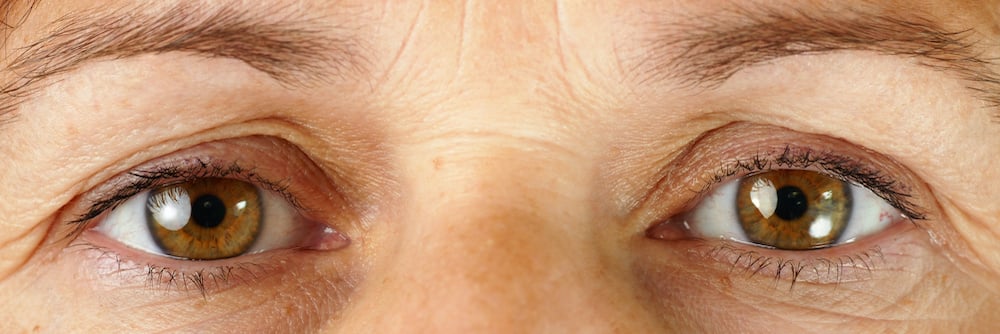
Eye movement disturbances are present in upt o 75% of MS patients.
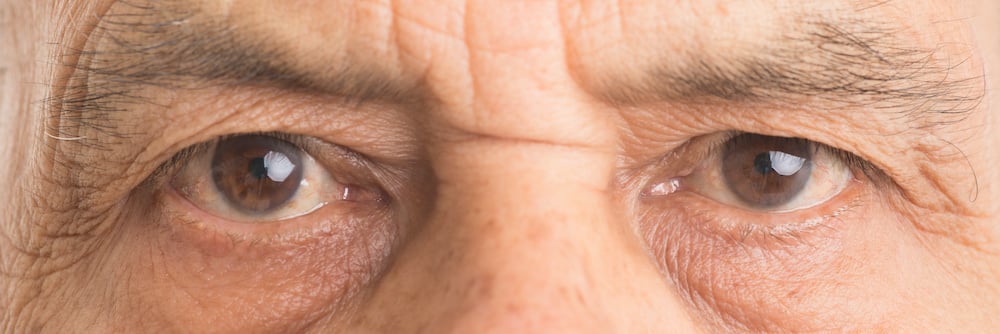
Oculomotor examinations help differentiate parkinsonian syndroms.
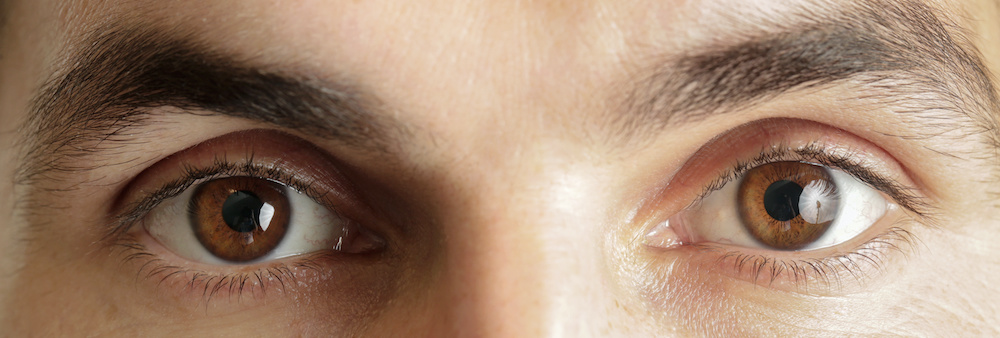
Ophthalmologic signs and symptoms may be a warning sign of a stroke.
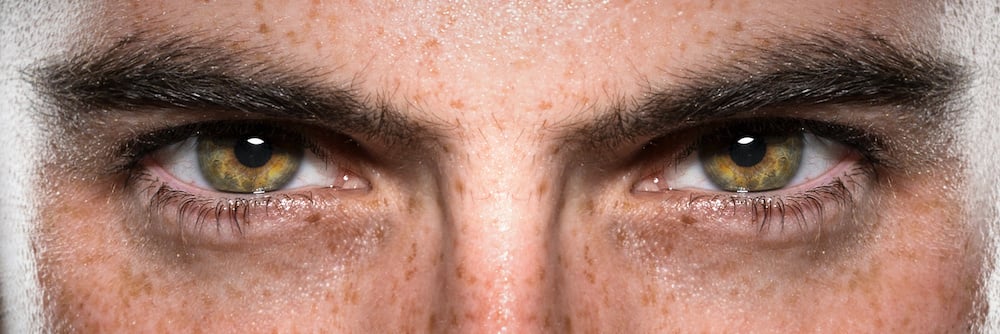
More than 50% of children with a tumor in the brain stem show neuro-ophthalmological signs.